
Fort Myers Previous Resident Sources
No single roll names everyone who occupied a Fort Myers address. The Lee County Property Appraiser search connects a current site address to a STRAP, Folio, legal description, and recent deed citation. The Clerk then carries the owner chain backward. Printed directories and censuses add people who never held title. Maps and permits answer a different question: whether the same building stood on the parcel at the time.
| Fort Myers source | Verified years | Keeper or access point | Evidence supplied |
|---|---|---|---|
| Official Records deeds | 1887 onward | Lee Clerk Landmark, kiosk, counter, or books | Owners, conveyances, and legal descriptions |
| Property roll | Current, with parcel-dependent sales history | Lee Property Appraiser | Site address, tax owner, STRAP, structure, and deed citations |
| Polk directories | 1915-16, 1921, 1923-27, 1935, and later editions through 1960 with gaps | Library and FamilySearch resources | Listed occupants, spouses, work, and addresses |
| Federal and Florida censuses | Federal through 1950; Florida 1935 and 1945 | Archives and library databases | Households, relationships, ages, and owner or renter status |
| Sanborn atlas | February 1926 | Library of Congress | Building form, use, and historic street labels |
| Permits and newspapers | Coverage varies | City or county custodian; library collections | Physical changes, project parties, deaths, kin, and prior places |
For a recent transfer, begin with the parcel card and its newest instrument. For a mid-century household, use a directory near the target year, then compare it with a census and the deed owner. For an early property, keep the legal description close at hand. Lee County was created in 1887, so earlier events may sit under a predecessor jurisdiction or a state or federal land system.
Modern access remains layered. The web index, registered subscriber view, courthouse kiosk, mailed copy service, and original books do not expose identical material. Search the easy channel first, but preserve the citation needed to move to the next one. A missing image is an access issue until the Clerk confirms that the underlying instrument is absent.
Start Fort Myers Address History
The current parcel card is the bridge between a modern address and older records. Record the physical, or situs, address rather than assuming the owner's mailing address is the same. Also save the 17-digit STRAP, eight-digit Folio, subdivision or lot-and-block description, current owner, and the latest instrument or book and page.
The Property Appraiser warns that its owner of record is the person or entity used for assessment and tax billing. That name may not be the fee-simple title holder, and it does not prove occupancy. Trusts, estates, companies, relatives, renters, and seasonal use can all separate ownership from residence.
See the Lee property database search options before choosing a query.
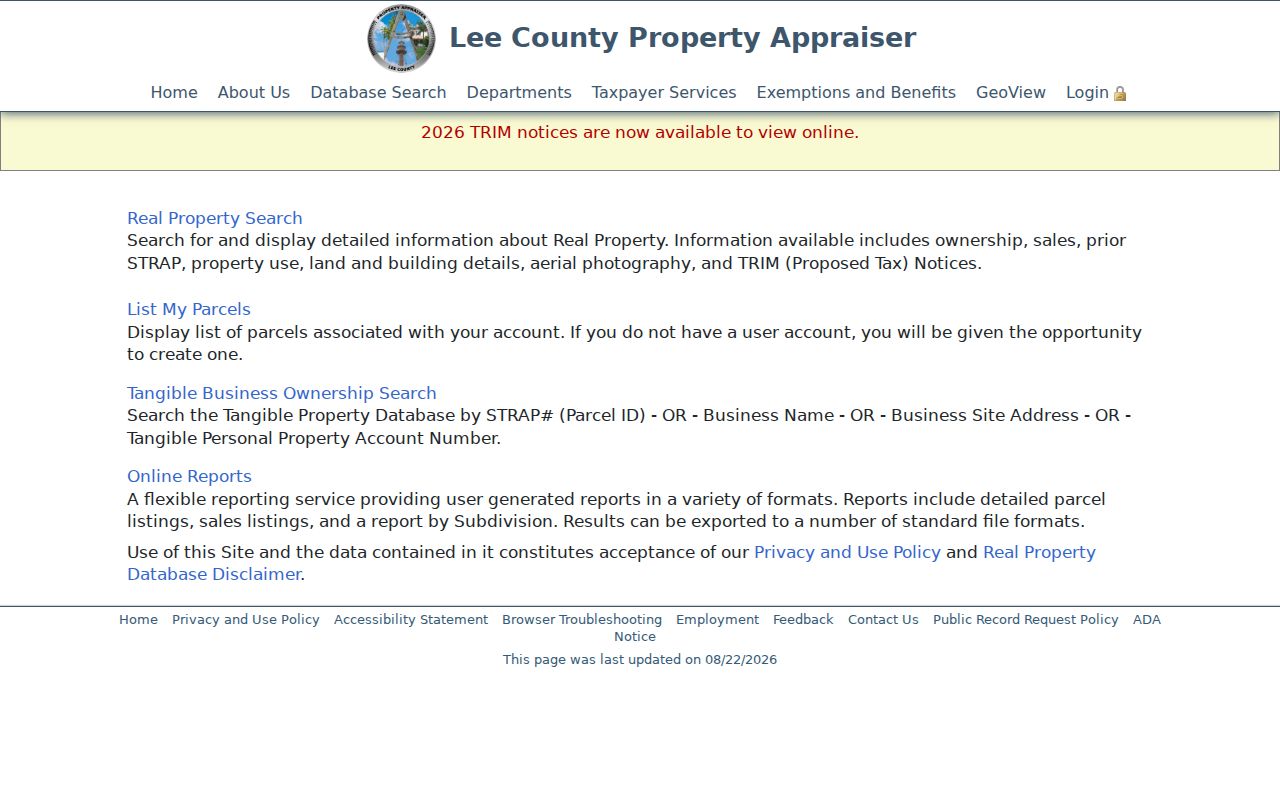
The captured search page shows why address, owner, and deed searches should remain distinct while tracing previous residents.
Three Keys to Fort Myers Records
A simple worksheet prevents the most common address-history mistake. Keep three identifiers on every row: current situs address, STRAP or Folio, and deed legal description. The street wording is useful for people and directories. The parcel identifiers connect current county systems. The legal description survives many mailing, renumbering, and jurisdiction changes.
- Grantor and grantee
- The grantor transfers an interest; the grantee receives it.
- Chain of title
- The linked sequence of conveyances for the same land.
- Legal description
- The lot, block, subdivision, or metes-and-bounds identity written into a deed.
- STRAP
- Lee County's 17-digit parcel identifier, distinct from a street address or ZIP code.
Do not use a changed road name as if it were a documented renumbering date. Fort Myers has locally known former road names, but the research did not verify an official ordinance and year for every change.
Plats can resolve the puzzle when the number fails. A plat fixes the subdivision, lot, and block in a recorded map. Once that geometry matches the deed, the researcher can test an older directory street label and a newer situs address against the same piece of land.
Trace Lee County Owners Backward
The Lee Clerk Landmark Official Records search reaches back to Lee County's creation. A deed chain follows interests in the parcel, not everyone who lived there. Match the legal description at each hop and distinguish a true conveyance from a mortgage, lien, release, corrective deed, or related filing.
- Open the parcel card and copy its newest instrument or book and page, STRAP, and legal description.
- Read that deed. Confirm the current owner as grantee, the seller as grantor, and the land description as a match.
- Search the seller as an earlier grantee. Use name variants, spouses, trusts, and estate representatives when the chain changes form.
- Repeat with each prior deed. Record execution and recording dates separately, since they are not always the same.
- When an image is missing, request the cited book and page through the kiosk, counter, mail service, or Historical Document Library.
The Landmark date screen begins at 01/01/2010 by default. Move that starting date backward or older deeds can appear to be absent. Once a parcel card supplies an instrument number or book and page, that direct citation is safer than a broad name search.
Fort Myers Deed Search Fallbacks
Online display is only one channel. Public images can often be viewed and printed without charge, but some record classes are restricted from anonymous display. A free Clerk Subscriber Service can expose eligible material, and the public kiosk is at the Recording Department, County Administration Building, 2115 Second Street, second floor.
Regular or certified copies may be requested at the counter or by mail to P.O. Box 2278, Attn: Land Records, Fort Myers, FL 33902. The verified official-record copy charge is $1 per page plus $2 per document for certification. An e-certified official record is $8. Include an instrument or book and page, indexed name, requested format, payment, and a stamped return envelope for mail.
For early books, the Historical Document Library holds more than 150 volumes, including general indexes, deeds and plats beginning in 1887. Staff may decline to copy fragile or oversized books, but visitors may photograph them or use a handheld scanner. Provisional entries marked R or I should be checked again after verification as V.
Map Earlier Fort Myers Buildings
The 1926 Fort Myers Sanborn atlas has 34 sheets showing footprints, construction, use, outbuildings, street labels, and fire infrastructure. It does not name residents. Pair its physical evidence with a directory or census from the same era, then reconcile the historic lot with the modern parcel through the plat and deed description.
Permits can bracket a new building, addition, repair, or demolition through project scope, issue and final dates, inspections, and named project parties. The City of Fort Myers or Lee County Community Development holds the file depending on jurisdiction. A Fort Myers mailing address may lie outside the municipality, so map the parcel before choosing a custodian.
Hurricane repairs can create a dense permit trail without any change in previous residents. Read the work description and dates instead of treating permit count as household turnover.
Downtown, Dean Park, and Gardner's Park lend themselves to early directory and Sanborn work. Edison Park and the McGregor corridor benefit from mid-century books and phone directories. Later south and east growth often depends more on parcel cards, aerial sequences, and permit records. Match the tool to the development era instead of forcing every address into the same source set.
Fort Myers Archives Fill Gaps
The Fort Myers City Archive Center can be searched by keyword, archive, time period, and start or end date. Choose all archive items when an older city record does not appear under a narrow category.
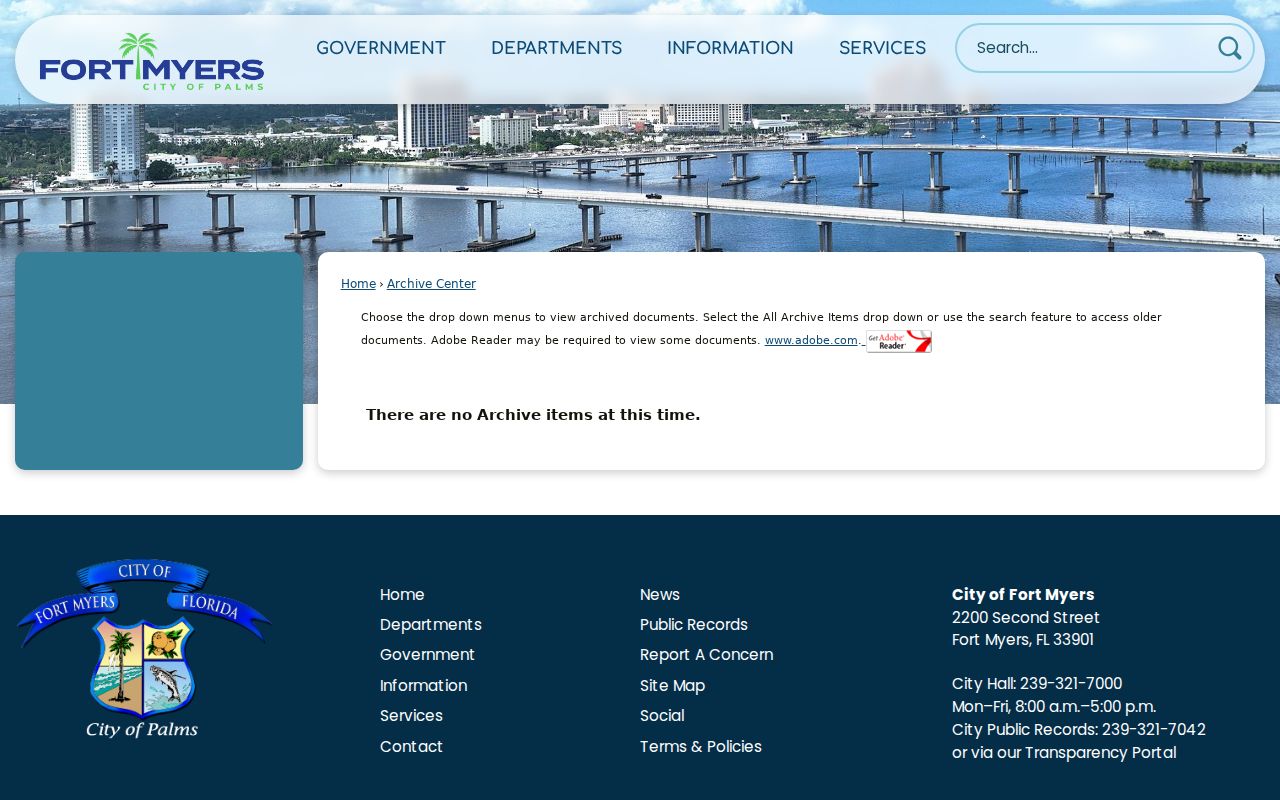
The archive search adds municipal evidence to a county deed trail, especially when permits, minutes, or other city files mention an address.
For uncataloged maps, photographs, and source documents, the Southwest Florida Historical Society offers another local research path.
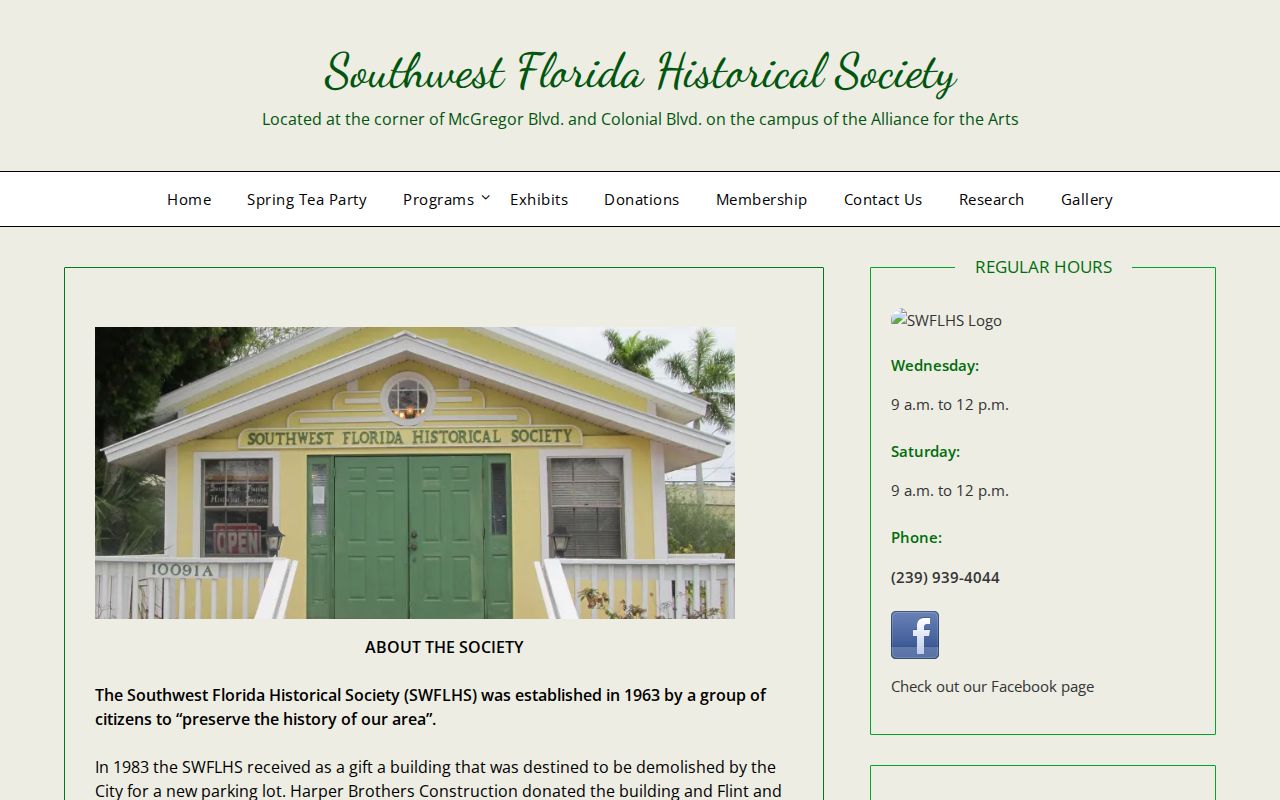
Compiled histories are leads. A name or address found there should be checked against the underlying deed, directory, map, obituary, or public record.
Fort Myers Owners Are Not Occupants
A property owner list cannot answer who lived here before by itself. A tax owner may be a trust, estate, company, or seasonal owner with mail sent elsewhere. Renters, relatives, boarders, and unlisted residents may never appear in the deed chain. The reverse error is just as serious: a directory occupant is not proof of title.
Keep separate columns for deed owner, tax-roll owner, directory occupant, census household, and source date. A homestead exemption is consistent with owner occupancy, but it does not name every person at the address. Each conclusion should remain a dated link between a person and a place, not a claim that lasts forever.
Connect Fort Myers Past Households
Polk directories provide a dated occupant layer between census years. Begin with an alphabetical entry, copy the spouse, work, address, and abbreviations, then check the street section when present. Move one edition earlier and later to bound an arrival or departure. The local runs and how to read them are detailed on the Fort Myers city directory page.
- Choose a directory closest to the target year and record the entry exactly, including page and edition.
- Check the reverse or street section for other adults, businesses, or a vacant notation at that number.
- Compare the 1920, 1930, 1940, or 1950 federal census, or the 1935 and 1945 Florida censuses.
- Keep household members and owner or renter status separate from the deed owner.
- Use the next directory, obituary, probate docket, or cemetery source to explain a move, death, or estate transfer.
The Fort Myers Regional Library's News-Press Necrology Index contains more than 8,000 cards. A hit is a finding aid, not a death certificate. Retrieve the full notice, save its date and page, then confirm the named relatives or former address with probate, cemetery, deed, or directory evidence.
Lawful use. Research previous residents for Fort Myers house history, genealogy, or an heir trail. Never use a record to track, harass, threaten, or harm a living person.