
Fort Myers Directory Collections
R.L. Polk editions form the main historical run. No inspected public page listed a continuous shelf at the local branch, so gaps must remain visible and the exact holdings should be confirmed with staff.
| Collection | Years | Where held | Access |
|---|---|---|---|
| Polk Fort Myers directories | 1915–16, 1921, 1923–27, 1935 | FamilySearch film 2308581 | Cataloged film and selected digital books |
| Later Polk editions | 1939, 1941, 1945, 1947, 1950, 1952–54, 1956–60 | Established library catalogs | Library or database; verify image rights |
| White/yellow pages | Apr. 1957–Apr. 1960; Apr. 1961–May 1963 | Library of Congress | Catalog and collection rules |
| Sanborn atlas | February 1926, 34 sheets | Library of Congress | Free public-domain images |
| News-Press Necrology Index | More than 8,000 cards | Fort Myers Regional Library | Genealogy desk and cited newspaper |
| Genealogy vertical files | More than 1,000 items reported | Fort Myers Regional Library | In-person reference help |
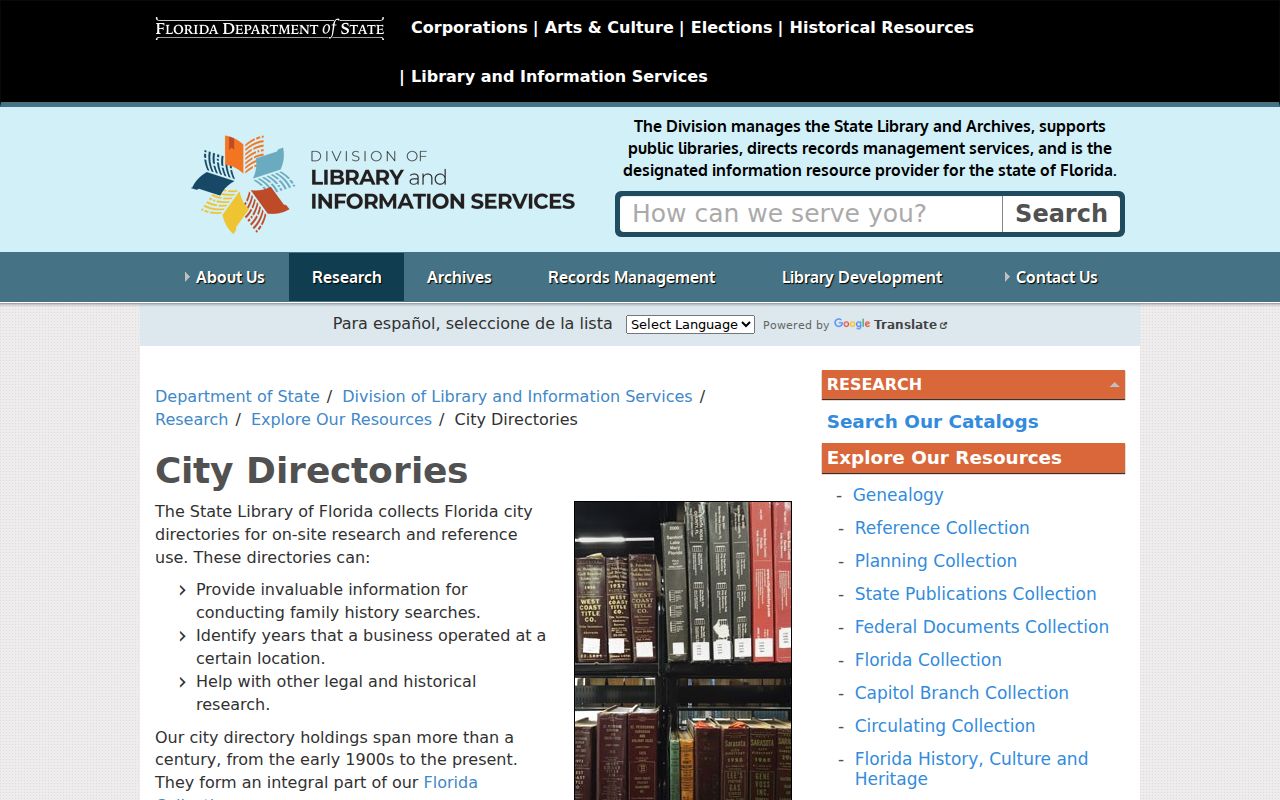
The State Library of Florida also holds city directories from the early 1900s to the present, arranged by city and then year for on-site reference. Ask its reference desk for the Fort Myers year list instead of assuming continuous coverage.
Fort Myers Polk Editions
FamilySearch catalogs one reel with six key titles: the 1915–16 R.L. Polk & Co. directory; 1921; 1923–24; 1925–26; the 1927 Greater Fort Myers directory; and the 1935 Fort Myers and Lee County edition. Later verified editions carry the record into the postwar years. Those dates can bracket a move, death, marriage, or change in work between federal census releases.
Publication gaps are evidence limits, not proof that a person left. A missing entry can also result from nonresponse, a name variant, an OCR error, an unlisted home, or geography outside that edition. Browse the neighboring surname entries and full street page before drawing a conclusion. Keep a log with printed name, spouse, occupation, address, edition, page, street-section match, and notes.
Greater Fort Myers Directory Geography
The 1927 volume is a local trap and a useful story. Its title says “Greater Fort Myers,” and its scope expressly includes Alva, Bay Shore, Bonita Springs, Buckingham, Estero, Olga, Owanita, and other communities. A hit proves inclusion in that regional publication. It does not prove residence within modern Fort Myers city limits.
This broad frame reflects an expanding regional center and changing directory market. The 1935 title also joins Fort Myers with Lee County. Record the community heading and page context whenever citing either volume. Modern postal geography creates a similar problem because Fort Myers mailing addresses extend into unincorporated Lee County.
Use Fort Myers Genealogy Resources
The Lee County Library genealogy hub points to the Fort Myers collection guide and branch resources.
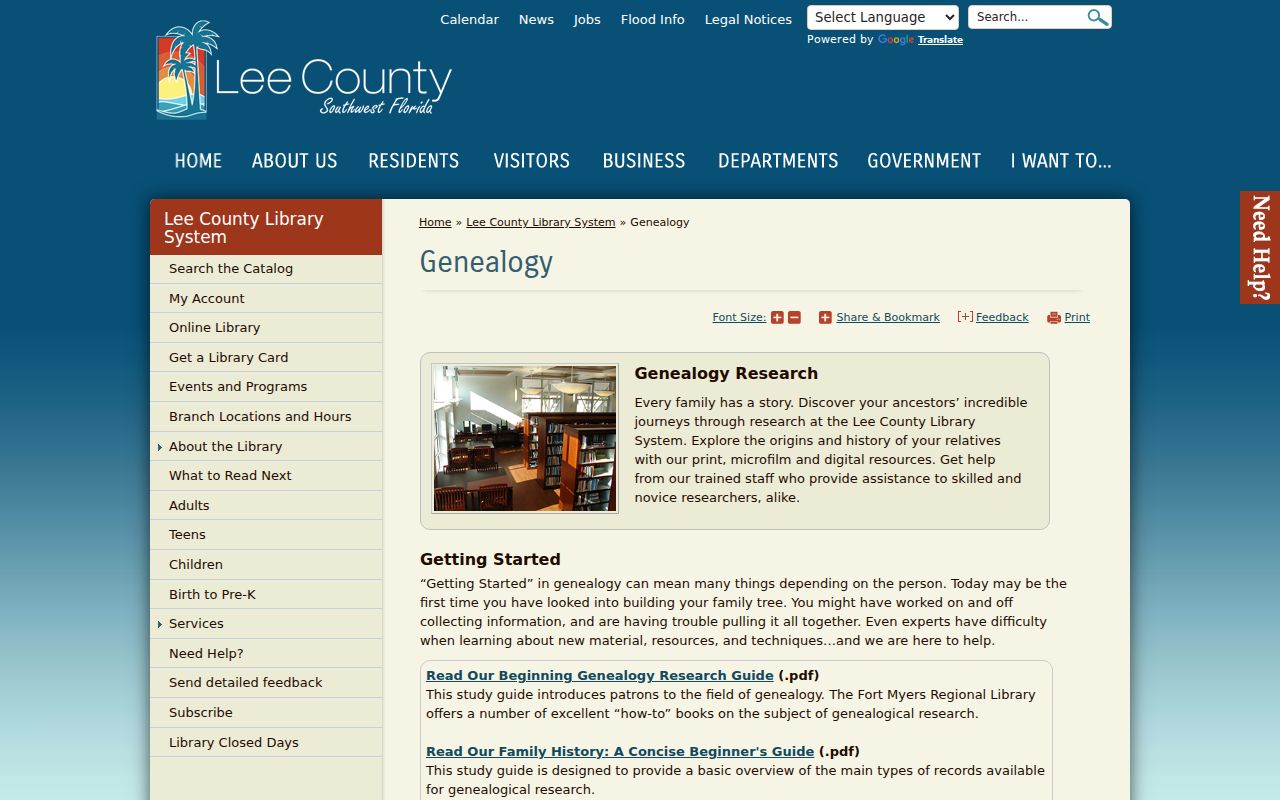
The collection includes city directories, county histories, Florida references, family and surname files, census tools, cemetery and vital sources, newspapers, and the News-Press Necrology Index. As a FamilySearch affiliate, the branch can offer enhanced access to restricted images from its terminals.
The Fort Myers Regional Library branch page gives current service and hour information.
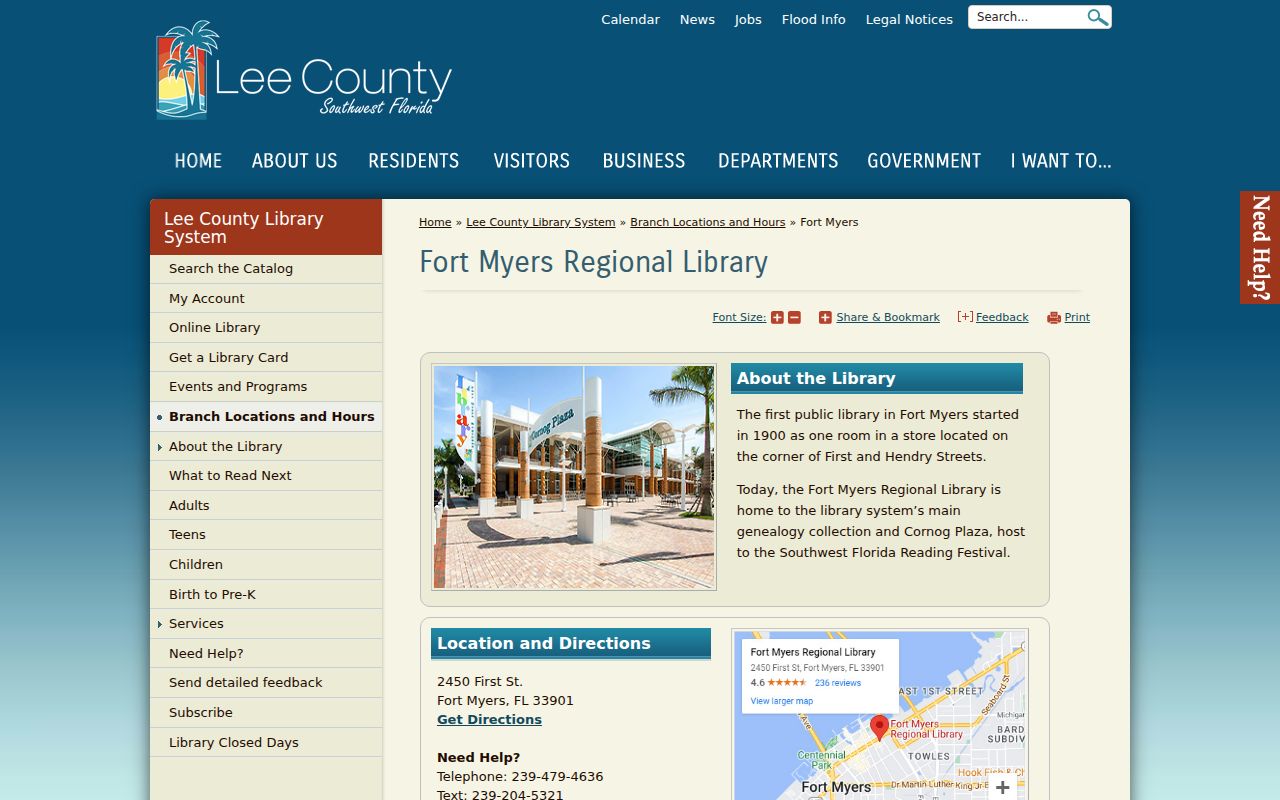
Ask the genealogy desk for cataloged directories, street guides, telephone books, necrology cards, and vertical files. Do not claim a complete reverse-directory run until staff confirms it.
Florida Holds Fort Myers Directories
The State Library city-directory collection is another official route. Its volumes are searched by city and arranged by city then year, with copies used on site. The Reference Desk can be reached at 850-245-6682 for a Fort Myers year check.
The state catalog is especially useful when a local public web page does not enumerate the shelf. Other fallbacks include FamilySearch Library film 2308581 and the Southwest Florida Historical Society at 10091-A McGregor Boulevard, open Wednesday and Saturday from 9 a.m. to noon, telephone 239-939-4044. Ask the society about maps, photographs, and source documents rather than presuming a named directory holding.
Read a Fort Myers Directory Entry
An alphabetical Polk entry usually starts with surname and given name or initials. A spouse may appear in parentheses. Occupation or employer follows, then a mark and address. The exact key for that volume controls the meaning.
| Name | Head entry, initials, and spelling as printed |
|---|---|
| Spouse | Often in parentheses |
| Trade | Occupation or employer, sometimes shortened |
| Home | h commonly marks house or home, followed by address |
| Residence | r can mean resides or rooms; bds means boards |
| Widow | wid may name the deceased spouse |
An actual 1923–24 street guide includes “127 Vacant,” named people at 132, 148, and 149, and St. Luke's Episcopal Church at 152. A business entry for ABC Mill Work Co. names principals, its trade, City Dock, and telephone 207. The book also uses many work abbreviations. A racial asterisk in that era is a discriminatory convention that must be preserved only as explained historical metadata.
- Criss-cross section
- A street or phone-order section that reverses the name index.
- Householder index
- A list centered on household heads or addresses, depending on the edition.
- Abbreviation key
- The volume's own legend for short forms; photograph it before interpreting entries.
Fort Myers Directory Record Eras
The directory timeline follows Fort Myers growth and helps choose companion records.
| Year or era | Directory milestone | Companion source |
|---|---|---|
| 1887 | Lee County created; earlier events may lie under predecessor jurisdictions | Earlier county, state, or federal land records |
| 1915–16 | Earliest cataloged Polk Fort Myers edition in the core reel | Plat, deed, newspaper, 1920 census |
| 1923–27 | Street-guide evidence and Greater Fort Myers regional scope | 1926 Sanborn atlas |
| 1935/1945 | Directory editions overlap Florida state census years | State census households |
| 1939–60 | Verified later Polk editions, with gaps | 1940 and 1950 federal censuses |
| 1957–63 | Cataloged telephone-directory runs | Deeds, newspapers, later parcel history |
The 34-sheet 1926 Sanborn atlas captures the land-boom city's physical form. It can prove that a structure stood at a labeled site and show material, use, outbuildings, and fire infrastructure. It cannot name an occupant. Pair it with the closest directory entry and preserve the plat or legal description when matching the site to a modern parcel.
Trace Fort Myers Families by Year
City directories fill the years between public censuses, while the 1935 and 1945 Florida censuses add unusually useful mid-decade checks. Keep occupant evidence separate from property ownership.
- Find the surname in the target edition and transcribe the whole entry, including spouse, trade, address, and marks.
- Check the street section for other listed adults or businesses at that number.
- Move one edition backward and forward, noting each address or status change.
- Compare the 1920, 1930, 1940, or 1950 federal census and the 1935 or 1945 Florida census.
- Search the necrology card index and cited newspaper when the person disappears.
- Use the Property Appraiser and recorded deeds only for ownership, not as proof of all occupants.
A disappearance can mean a move, death, omission, publication gap, changed name, annexation, or OCR failure. An obituary may name relatives and former places, while probate or a deed can support an heir trail. Cite the underlying record rather than treating a compiled family tree as final proof.
Extend Fort Myers Directory Findings
Different neighborhoods call for different records. Downtown, the River District, Dean Park, and Gardner's Park fit early Polk and Sanborn work. Edison Park and the McGregor corridor gain detail from mid-century directories and telephone books. Dunbar history requires Black newspapers, churches, schools, cemeteries, oral histories, and directory evidence together. Later south and east growth is stronger in parcel, permit, aerial, and tax sources.
Florida Memory, DigitalFGCU, the Library of Congress, FamilySearch, and local vertical files add photographs, maps, oral histories, and manuscripts. School yearbooks can support a classmate search. Church, veterans-post, and business records may show a public affiliation, but private membership and congregation lists remain private. The directory entry stays one dated piece in a larger proof trail.
Fort Myers City Directory Limits
A printed occupant is not necessarily an owner. Some residents were unlisted, seasonal, away, boarding, or outside the publisher's chosen area. Businesses may appear at an address where no principal lived. Telephone books and city directories also use different inclusion rules.
Copy the title, edition year, page, community heading, and abbreviation key with every finding. Note whether the result came from an alphabetical list or street section. Do not silently convert a historical racial mark into a modern category, and do not repeat it without context. When a scan is unclear, consult film or staff rather than guessing.
City directories are strongest when two editions agree and another source explains the change. Census, obituary, cemetery, deed, probate, map, and newspaper evidence can each test a different part of the story. A careful conclusion remains tied to its year.